
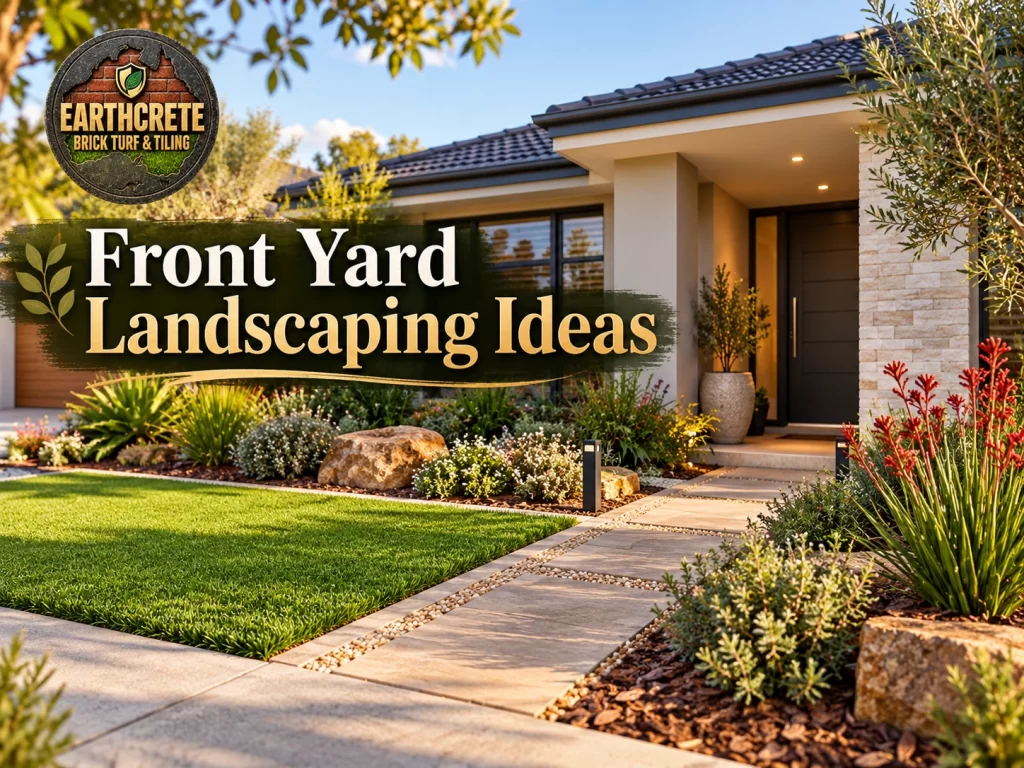
The best front yard landscaping ideas for Perth homes start with a simple layout. Before you pick plants or paving, work out how the driveway, path, garden beds, lawn and planting will fit together. A good plan looks neat from the street and is easy to live with every day.
Your front yard is the first thing visitors, buyers and neighbours see. In Perth, we get hot, dry summers and mild, wet winters, so a good front garden has to look nice and also save water. Modern front yard landscaping here usually means clean lines, tough plants, a clear path and a garden that doesn’t need constant work.
This guide is for Perth homeowners who want a front garden that looks good, suits the climate and is easy to look after. We cover layout, plants, paving, lawn, the driveway and the finishing touches. If you want help bringing planting, lawn and paving together, our team offers landscaping services in Perth that start from a clear plan.
You can mix and match ideas like lawn panels, native garden beds, a paved entrance, a bench or a small water feature. They all work better once the layout is right, so that is where we start.
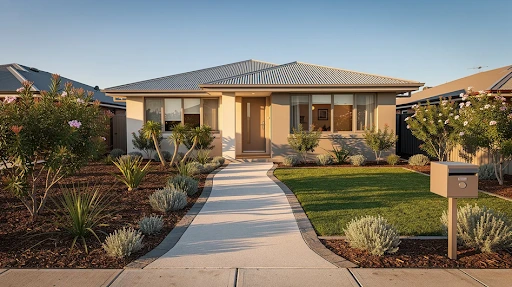
How Do You Plan a Front Yard Layout for a Perth Home?
Start by mapping how people move through the space, what you can see, and what is already there. Then decide where plants, lawn and paving go.
Start With the Front Door, Driveway and Street
Sketch your front yard as if you were standing on the street. Mark the front door, driveway, windows, letterbox and any trees you want to keep. Then look at the route people naturally take from the street or car to your door. A clear path to the front door makes the home feel welcoming and shows visitors where to go.
Look at the yard from inside the house too. What you see from the living room window matters as much as the view from the street. If your block slopes or the ground is uneven, you may need earthworks and site preparation before any planting or paving goes in. It is much cheaper to fix levels first than to dig things up later.
Decide What the Front Yard Needs to Do
Every front yard has a different job. Some people just want good street appeal. Others want a small lawn for the kids, a spot to sit near a window, screening from a busy road, or an easy walk from the driveway to the door.
Plan around what your home actually needs, not what you saw on another street. Keep clear sightlines near the driveway and any corners so you can see people and cars when you leave.
Three Front Yard Layout Ideas for Perth Blocks
| Perth frontage | Practical layout | Main focus |
| Around 12 m suburban block | A central lawn or planting area, a clear path and deeper beds along the sides | Balance and street appeal |
| Around 8 m narrow frontage | One clear path with small planting areas beside it | Open space and easy movement |
| Corner block | Layered planting along the exposed edges, with open views for cars | Privacy without blocking sightlines |
These are starting points, not strict rules. Your block, aspect and street will change the details.
Which Plants Work Well in Perth Front Garden Designs?
Choose plants that handle hot, dry summers, winter rain, your soil type and the amount of time you have for upkeep.
Choose Plants for the Site, Not Just the Look
Before you buy anything, check how much sun each area gets, what the soil is like, how big each plant will grow and how much water it needs. Also think about how close it will be to paths, windows and the driveway.
Many Perth yards have sandy soil that repels water. Mixing in compost, clay or a wetting agent before planting helps the soil hold moisture. Try grouping plants with similar water needs together. This is often called hydrozoning, and it makes watering much simpler. The Water Corporation has helpful advice on waterwise gardening in WA if you want to go deeper.
Some Western Australian natives give you shape, flowers and colour with little fuss:
- Kangaroo paw (Anigozanthos): bold flowers and a medium height
- Grevillea: colour and structure, with many compact types available
- Lomandra and Westringia: good for borders and low hedges
- Banksia: a strong feature shrub or small tree that attracts birds
- Callistemon: bright flowers, copes well with sandy and coastal soil
- Grass trees (Xanthorrhoea): slow growing, with a striking shape
You can also mix natives with tough exotics like olive trees, rosemary and agave. Ornamental grasses add soft texture and don’t need much care. Natives have adapted to local soil and rain, so they usually need less fertiliser and fewer pest treatments.
Use Plant Layers to Give the Garden Shape
Think of the garden in three layers:
- Back: taller plants along the boundary for screening
- Middle: shrubs that give the bed body
- Front: low groundcovers that define the edges
Repeat three to five plant types across the whole front garden. It looks tidier and is easier to maintain than a big mix of one-offs. Always check the mature size before you decide how far apart to plant. Crowded beds create more work, not less.
What Are the Best Front Entrance Landscaping Ideas?
The best front entrance landscaping gives a clear route to the door and uses plants and paving to link the entrance to the rest of the garden.
Straight or Curved Paths?
A straight path suits a formal home with a symmetrical front. A gentle curve feels softer and suits a relaxed garden. Either way, the path should connect the street, driveway and front door in a way that makes sense. Aim for a width of 1.2 to 1.5 m so two people can walk side by side.
For ideas on defining the route, see our page on garden paths and borders.
Frame the Entrance Without Hiding It
Plant softly beside the path and keep low planting near the door. Keep thick or prickly plants away from the walking line. A small paved landing at the door gives people a place to stop and feels like a proper arrival. If you repeat the colours or materials of the house in the path, the whole entry looks more connected.
A hanging basket or one large pot beside the door adds height without taking up floor space.
Use Lighting to Mark the Way
Low-voltage LED lights make the path safer at night. A few path lights, a downlight over the door and a soft uplight on a feature tree are enough. Choose warm tones and keep it simple.
How Can Paving Shape Modern Front Yard Landscaping?
Paving gives the front yard structure. It shows where to walk, where to arrive and where the planting starts.
Choose a Paving Style That Suits the Home
- Brick paving: warm colour and texture, good for older and traditional homes
- Large concrete pavers: a clean, modern look for contemporary homes
- Exposed aggregate: textured and slip-resistant, with earthy tones
- Natural stone: an organic, high-end feel, often used for walls and paving
The paving should suit the front of the house, not fight with it. Corten steel is also a popular choice for edging and raised beds.
Simple Front Yard Paving Ideas
- A paved landing right at the front door
- Stepping stones through a planted bed or a gravel strip
- A walkway from the driveway to the door
- A small paved seating spot, if you have the room
If you like the warm look of brick, see our page on brick paving for front yard paths for colours, patterns and entrance ideas.
Keep the Materials Simple
Pick one main paving material and, if needed, one contrast material. Keep the tones similar across the paving, edging and house. Too many materials make a small front yard feel busy.
How Should You Balance Lawn and Garden Beds?
Treat the lawn as a feature, and use garden beds to frame it, soften hard surfaces and dress the front of the home.
Give the Lawn a Clear Shape
You don’t need to cover the whole front yard in grass. A lawn panel in a simple shape, such as a rectangle, a soft curve or a diagonal, often looks better. Rectangles suit formal homes. Curves suit relaxed gardens. Avoid tricky shapes that are hard to mow.
Put Garden Beds Around the Lawn
Place deeper beds along the boundaries for taller plants, privacy and shade. Use narrower borders along paths. Leave enough room at the lawn edge to mow easily, and put the lawn in the sunniest part of the yard, because grass struggles in heavy shade.
Layered planting looks better than a flat patch of turf. A feature tree such as an ornamental pear, frangipani or olive gives you a long-term focal point and helps frame the house.
Good soil prep and a level base matter before any natural turf installation. With solid edging, the lawn and garden beds meet cleanly.
Think About Finished Levels Before You Plant
Lawn, paving and garden beds should meet at sensible heights. Poor transitions cause puddles, trip hazards and messy edges. A gentle mound can help with drainage and add interest.
How Can You Integrate the Driveway Into the Front Garden?
The driveway is part of the front yard design, so use planting and borders to help it blend in.
Soften Wide Driveway Edges
A wide driveway can take over the front yard if nothing frames it. Narrow planting strips, low shrubs, grasses and groundcovers along the edge soften it. Repeating the same plants along the length of the driveway gives a steady rhythm.
Keep Vehicle Movement and Sightlines Clear
Don’t let mature plants block the driveway. Keep a clear view when you reverse out, and keep planting back from where car doors open. Think about people walking past, too.
Create a Consistent Look
Repeat paving tones, edging materials and plant colours from the path to the driveway so everything feels connected. If you are choosing a surface, look at our concrete driveway options to see how they can match the rest of your landscaping. A low wall or raised bed where the driveway meets the garden can add interest while keeping views open.
Which Focal Points Make Front Yard Garden Ideas Stand Out?
A focal point gives the garden a clear centre without filling the space with extras.
Choose One Main Feature
One strong feature works better than several small ones competing. Good options are a feature tree, a large pot, a small water feature, a sculpture or a bench. For Perth, a recirculating bowl or wall-mounted spillway adds sound without using much water.
A modern fence or a classic picket fence behind your planting can act as a backdrop. Waist-high hedging lets light through, while taller hedging helps block traffic noise.
Put the Focal Point Where It Can Be Seen
Think about the view from the street, the front door and the living room. Use plants around it to frame it, not hide it. Keep the entry and driveway clear.
Keep Small Front Yards Simple
In a small yard, stick to one focal point, fewer planting zones and clear sightlines. A slim tree or tall pot draws the eye up. Fewer decorations make a small garden feel bigger.
What Finishing Details Keep Front Yard Landscaping Looking Neat?
Clean edging, the right mulch, good plant spacing and simple lighting keep the yard looking tidy between big jobs.
Define the Edges
Steel, brick, corten or concrete edging between lawn, paving, gravel and beds keeps everything in place. Sharp edges make even a simple garden look finished, and they cut down on trimming.
Use Mulch and Plant Spacing Carefully
Mulch holds moisture and stops weeds, which really helps in a Perth summer. A layer of about 5 to 10 cm of coarse organic mulch works well. Pine bark is a good choice. Keep mulch away from plant stems so they don’t rot. The Water Corporation also has tips on saving water in the garden.
Gardens use a big share of household water in Perth, often around 40%. Native and drought-tolerant plants cut that use, and they usually need less fertiliser and pest control too.
Add Simple Lighting and a Seasonal Routine
Path lights and a soft uplight on a feature tree make the garden look good after dark. A basic yearly routine keeps things fresh:
- Autumn: top up mulch and check the irrigation
- Winter: plant new additions so they can settle in
- Spring: light pruning, and feed natives after they flower
- Summer: check soil moisture and adjust watering
A quick monthly walk around the yard to check edges and tidy up goes a long way.
How Can You Bring Your Front Yard Landscaping Ideas Together?
The best front yards treat the path, driveway, lawn, planting and focal point as one design. Here is a simple order to follow:
- Map access and views
- Decide how you will use the yard
- Set the main path
- Place the lawn and garden beds
- Choose plants for Perth conditions
- Plan the driveway
- Add paving and one main focal point
- Finish with edging, mulch and lighting
Before you talk to a landscaper, gather your measurements, photos from the street and from inside the house, a rough sketch, and notes on sun and existing trees. This keeps the conversation about layout and saves you from costly changes later.
A well-planned front garden improves street appeal now and makes your home nicer to live in for years.
Ready to Plan Your Front Yard Layout With EarthCrete?
EarthCrete helps Perth homeowners turn front yard ideas into plans that can actually be built. If you have measurements, photos or a rough sketch, discuss your front yard project with our team. We will help you work through layout options that suit your block and your style.
FAQs
What is the best layout for a small front yard?
Keep a clear route to the door, one or two small planting areas and a single focal point like a large pot or feature plant. Don’t add too many decorations, and keep sightlines open. A slim tree or vertical planting adds height without using floor space.
What plants are suitable for a Perth front garden?
Choose plants that suit your sun, soil, space and water supply. Natives like grevillea, lomandra and kangaroo paw cope well with Perth’s dry summers and usually need less water and care. Check the mature size before planting near paths or windows.
How can I make my front yard look more modern?
Use clean lines, a few materials, repeated planting, sharp edges and a simple path to the door. Stick to one or two paving types, keep the colours consistent and plant in tidy groups rather than at random.
How can I improve street appeal without redoing the whole yard?
Start small. Fix the entrance path, reshape one garden bed, add a feature plant, update the edging or put in path lights. Fresh mulch and neat edges alone can lift the look of the whole yard.