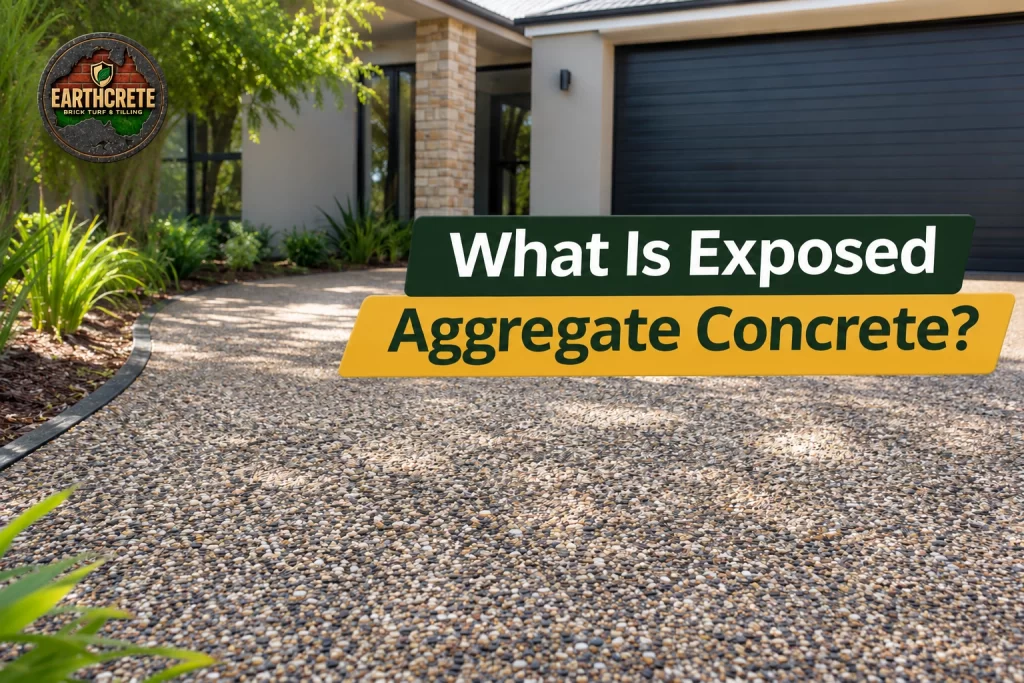
Walk through a Perth neighbourhood, and you’ll likely spot driveways, garden paths and pool surrounds finished with a distinctive pebbled surface. This is exposed aggregate concrete, a decorative finish that combines the strength of concrete with the natural appearance of exposed stones.
Popular across Australia for its versatility and outdoor appeal, exposed aggregate offers an alternative to plain concrete and traditional paving. But how is it made, what are its advantages and limitations, and can it be installed over existing concrete?
If you’re considering this finish for your Perth property, here’s what you need to know before making a decision.
What Is Exposed Aggregate Concrete?
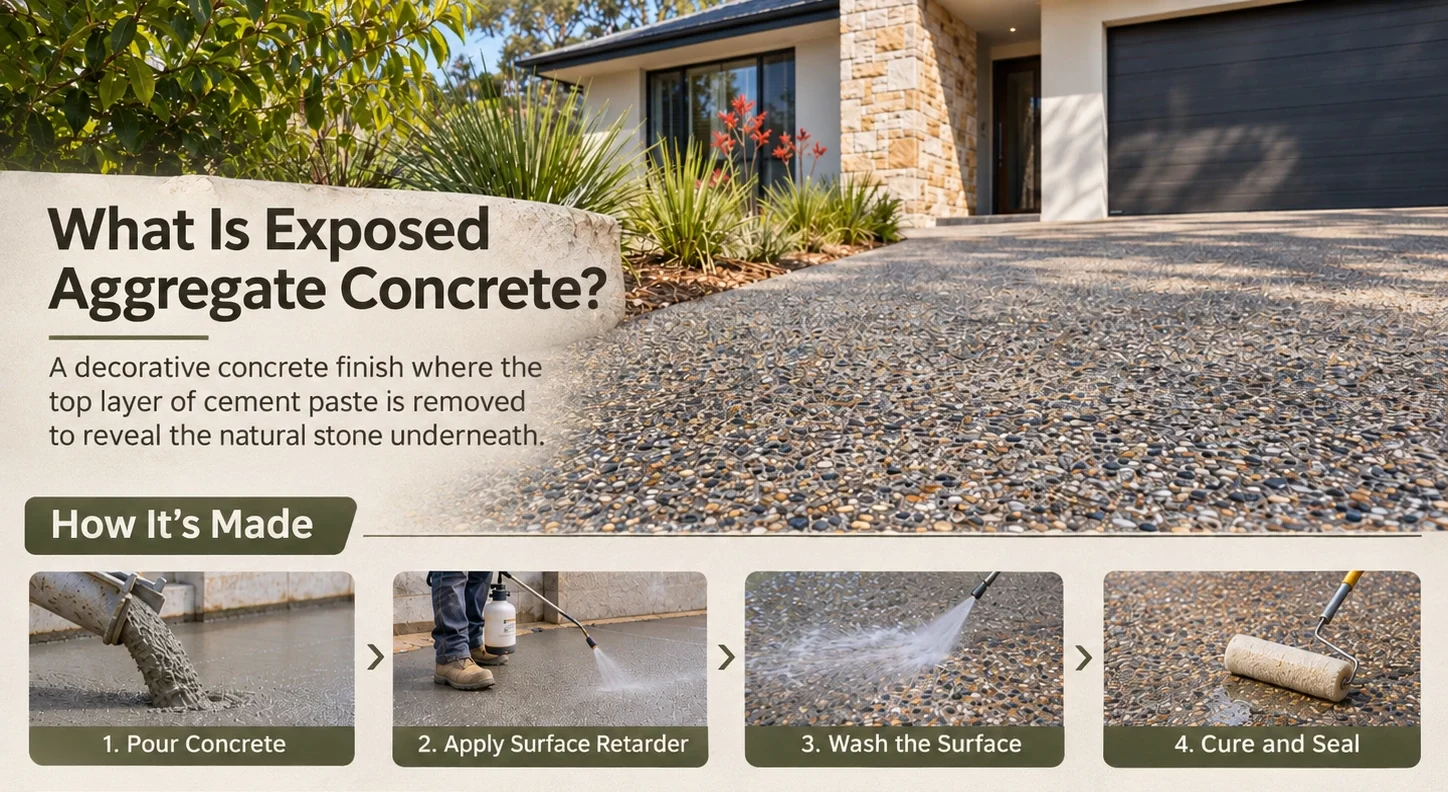
Exposed aggregate concrete is concrete with its top layer of cement paste removed to reveal the decorative stones mixed into it. The result is a textured, natural stone finish that is durable, slip-resistant and low maintenance. It is also called exposed concrete, washed concrete or pebblecrete, and it is widely used outdoors.
The stones you see are the aggregate. Common choices include river pebbles, crushed granite, quartz, basalt, recycled glass and even crushed shell. Plain concrete is trowelled smooth, so its surface is mostly cement paste. With exposed aggregate, the stones become the surface, which is where the extra grip and character come from.
For a closer look at how the finish is achieved, see how EarthCrete handles exposed aggregate concrete installation in Perth.
How Exposed Aggregate Concrete Is Made
The finish looks simple, but it depends on a careful sequence of steps. Here is how a typical exposed aggregate slab comes together:
- Site preparation and excavation. The ground is excavated to the required depth and levels, and the sub-base is prepared and compacted.
- Formwork, base and reinforcement. Edge formwork sets the shape of the slab. Reinforcement mesh is placed to give the concrete structural strength. Expansion and control joints are planned at this stage to manage movement.
- Pouring and levelling. Concrete is poured and levelled. The decorative stones are either mixed through the concrete (mix-through) or broadcast over the wet surface (seeded aggregate), depending on the look and finish required.
- Applying a surface retarder. A surface retarder is applied to the top of the slab. It slows the setting of the cement paste at the surface only. So, the paste stays soft while the concrete below hardens.
- Washing to expose the stones. Once the slab has set enough, the softened paste is washed away with controlled water washing. How far the paste is removed sets the aggregate exposure: light, medium or heavy. A light exposure shows just the tops of the stones, while a heavy exposure reveals much more of each one.
- The slab is left to cure so it gains its full strength.
- Sealing and tidy-up. A protective sealer is applied to lock in the colour of the stones and make the surface easier to look after, and the site is cleaned up.
Timing matters more than most people realise. Wash too early and stones can loosen or be pulled out. Wash too late and the surface paste will not come off cleanly. That is why experienced concrete installers read the weather, the mix and the slab itself rather than working to a fixed clock.
What Are Light, Medium and Heavy Aggregate Exposure?
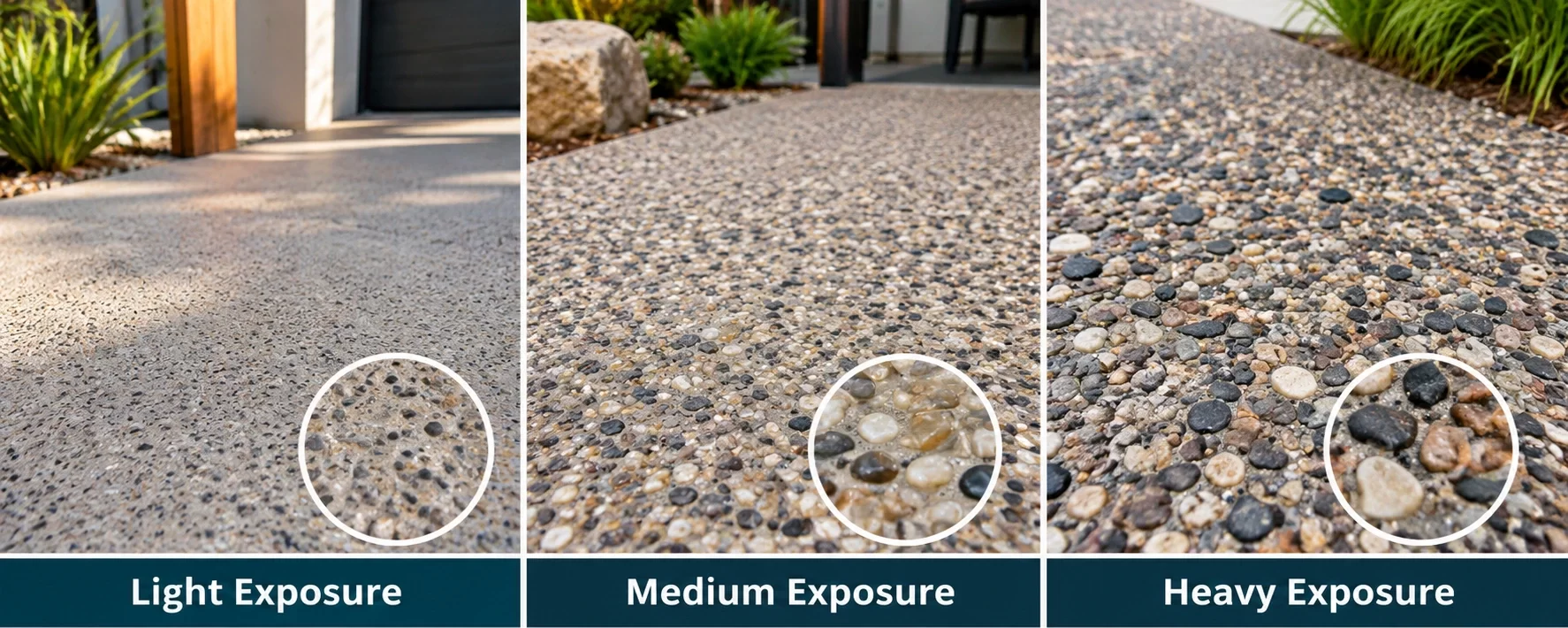
Aggregate exposure refers to how much of the decorative stone is visible after washing.
- Light exposure: Only the upper portions of the stones are visible, creating a relatively subtle texture.
- Medium exposure: More of each stone is revealed, producing a balanced, recognisable pebbled finish.
- Heavy exposure: A greater proportion of the aggregate is visible. This creates a more pronounced, textured appearance.
The right exposure level depends on the desired appearance, aggregate selection and surface use.
Why Exposed Aggregate Is Popular in Australia
Exposed aggregate concrete is popular in Australia because it pairs a decorative natural stone look with practical everyday performance. The textured surface offers grip, the continuous slab suits outdoor living, and a well-built slab handles foot traffic and vehicles. Different stones and finishes also let homeowners match the style of almost any property.
Here are five reasons exposed aggregate keeps winning homeowners over:
- Durable for everyday use. Properly prepared and installed, it handles daily foot traffic and vehicle loads.
- Low maintenance. Sweeping, hosing and the occasional reseal usually do it, and a continuous slab has fewer joints for weeds than pavers.
- Grip underfoot. Exposed stones add texture that can beat smooth concrete for traction, though results vary with the stone, sealer and conditions.
- Flexible designs. Pick the stone colour, size, concrete tone and exposure level to suit your home. Lighter stones can absorb less heat, but no finish stays cool in strong summer sun.
- Made for outdoor living. One continuous surface runs across alfresco areas, patios, paths and pool surrounds.
What About Perth Conditions?
Perth’s sandy soils and reactive clay pockets make ground preparation especially important. Seasonal ground movement can affect poorly prepared slabs, so excavation, sub-base compaction, reinforcement and drainage all need careful attention before the pour.
EarthCrete covers these considerations in a guide to concrete driveway grades and thickness in Perth.
Where Is Exposed Aggregate Used Around the Home?
Exposed aggregate is one of several concrete driveway finishes available to Perth homeowners. It is used in a wide range of residential and commercial outdoor areas, thanks to its texture, durability and decorative appeal.
Here are the most common exposed aggregate applications:
- A matching crossover keeps the look consistent, but check local council requirements first.
- Garden pathways. Choose a stone size and texture that suits the foot traffic.
- Alfresco areas and patios. The natural stone look complements landscaping and outdoor furniture.
- Pool surrounds. The texture can offer traction, but confirm the finish and sealer suit wet areas.
- Commercial walkways. Entryways and external paths that need a hard-wearing, decorative finish.
What Are the Pros and Cons of Exposed Aggregate Concrete?
Exposed aggregate concrete offers strong grip, durability and design choice, but it is rougher underfoot, usually costs more than plain concrete and needs periodic resealing. Weighing both sides before you commit is crucial:
Pros of Exposed Aggregate Concrete
- Textured finish can improve traction
- Durable when properly installed and maintained
- Wide range of stone colours and designs
- Helps conceal some everyday dirt and marks
- Continuous surface with fewer joints than pavers
- Suits driveways, paths and outdoor entertaining areas
Cons of Exposed Aggregate Concrete
- Rougher underfoot than smooth concrete
- Usually costs more than basic plain concrete
- Oil and leaf stains can be harder to remove from the texture
- Needs periodic sealer maintenance
- Repairs can be hard to colour and texture-match
The right choice depends on where it is going. A heavily textured finish can work well on a driveway but feel less comfortable where children sit or play barefoot.
Exposed Aggregate vs Plain, Coloured, Stamped Concrete and Pavers
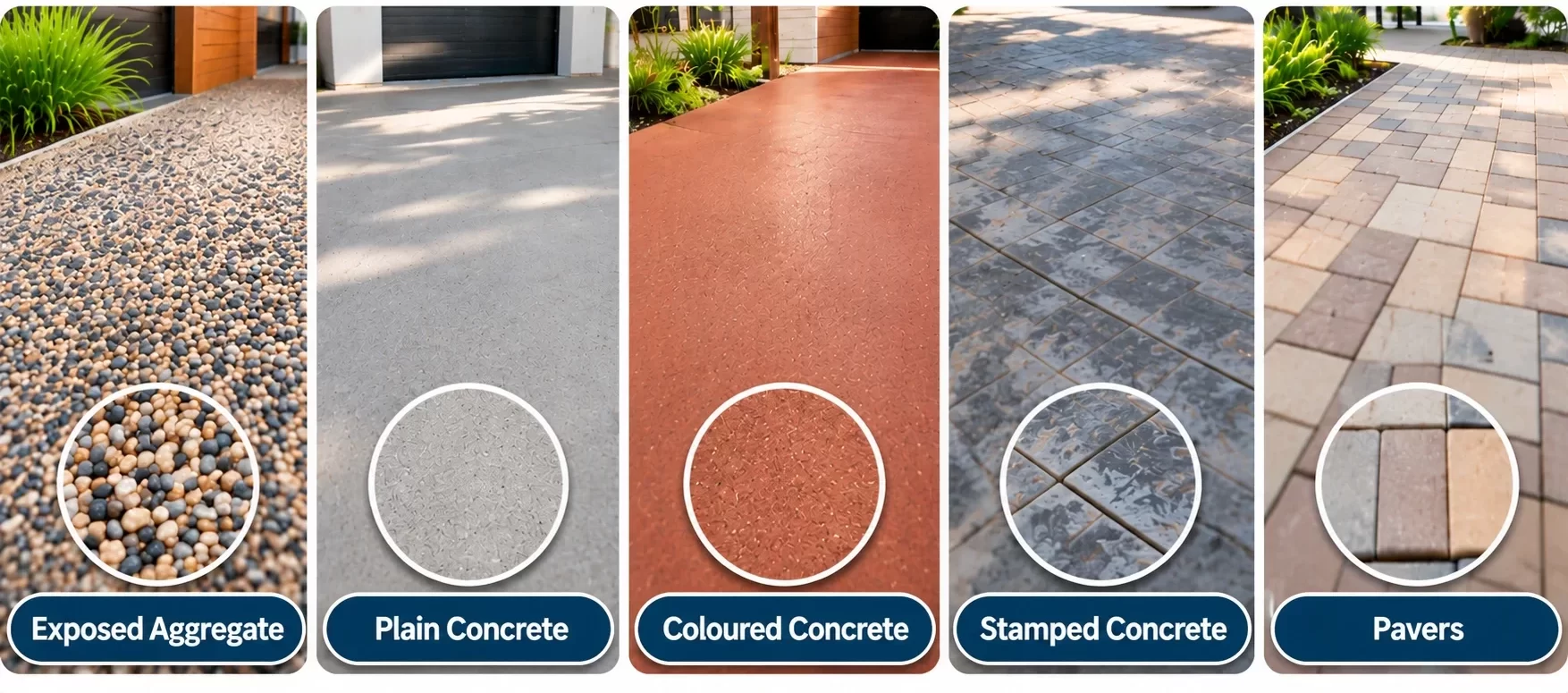
Comparing exposed concrete with the main alternatives side by side makes the differences clearer before you request a quote.
Finish | Appearance | Grip | Maintenance | Best for |
Exposed Aggregate | Natural, visible stones | Textured | Periodic sealing and cleaning | Driveways, pool surrounds, alfresco areas |
Plain Concrete | Smooth, uniform | Generally smoother | Low | Simple paths and slabs on a budget |
Coloured Concrete | Smooth, tinted | Depends on texture | Periodic care; colour can weather | Clean, modern looks |
Stamped or Stencilled Concrete | Patterns imitating stone, brick or tiles | Depends on pattern and finish | Sealer upkeep | Decorative patios and entries |
Pavers | Individual bricks or stones with visible joints | Depends on material and finish | Joint upkeep, occasional levelling | Classic looks and easy section repairs |
Which should you choose?
Plain concrete suits simple jobs and tight budgets. Coloured concrete adds interest without exposing stones, and stamped or stencilled finishes offer more pattern options. Pavers allow flexible designs and individual replacement, though their joints need extra upkeep. Exposed aggregate is the better fit if you want a natural stone look with a continuous concrete surface.
Choosing Your Decorative Concrete Aggregate
The exposed concrete aggregate you choose shapes how the finished surface looks and feels. Consider these factors:
- Stone type and colour. River pebbles look natural and rounded, while granite, basalt, quartz, glass or shell vary in tone and texture. Lighter stones may reflect more sun, and darker stones can show dust and marks more.
- Stone size. Smaller stones look finer and subtler, larger stones bolder, and size changes how it feels underfoot.
- Concrete colour. Oxide pigments tint the base concrete so it works with the stones.
- Exposure depth. Light, medium or heavy exposure changes the look and texture.
- Sealer type. Penetrating sealers leave no visible film, while topical acrylic or polyurethane sealers form a layer and range from natural to wet-look gloss.
Acid washing or etching is used in some specialist finishes, but it does not replace the controlled washing that exposes the aggregate.
Seeing finished work helps. Browse EarthCrete’s projects for inspiration.
Can You Put Exposed Aggregate Over Existing Concrete?
Yes, in many cases you can get an exposed aggregate finish over existing concrete without tearing it up, but not by exposing the old slab itself. The usual routes are a new resurfacing overlay containing decorative aggregate or a decorative stone or resin system laid over a sound, level slab.
An old plain slab has no decorative stones to reveal, so every option adds a new layer on top. Which one suits depends on the condition of the slab and how the area is used:
- Resurfacing overlay or new topping. A new cement-based layer containing decorative aggregate is applied over the old slab, bonded or unbonded, then washed to expose the stones. This gives a genuine exposed aggregate surface, but it needs a structurally sound slab and adds height.
- Decorative stone or resin system. Stones or decorative flecks are bound in a resin layer over the slab. It can look similar, but it is a resin finish rather than stones exposed in concrete, so wear, heat and repair characteristics vary by product.
- Spray-on resurfacing coating. These products imitate the look at a lower cost, but they are a thin coating, not true exposed aggregate.
- Removal and replacement. If the slab has significant damage, movement or drainage problems, new concrete is often the better long-term solution.
Before choosing, a contractor should check:
- Cracks, movement and the structural condition of the slab
- The surface itself, including old sealers, coatings and stains that can affect bonding
- Available height at garage entrances, doors and adjoining surfaces
- Drainage falls and water runoff
- The thickness, product and bonding method needed
An overlay will not suit every slab, so have yours assessed before deciding between a resurfacing overlay, a resin system or full replacement.
How to Care for Exposed Aggregate Concrete
Exposed aggregate is low maintenance, but regular cleaning and the occasional reseal keep it looking its best:
- Sweep regularly. Clear leaves and debris before they settle into the texture.
- Wash with water. Use a hose or low-pressure wash, with mild detergent for marks.
- Clean spills promptly. Oil and grease are harder to remove once they settle.
- Avoid harsh chemicals. Strong acids can damage the concrete or sealer.
- Reseal periodically. Perth’s UV wears sealers down, so follow the installer’s recommendations.
Exposed Aggregate Concrete FAQs
Is exposed aggregate concrete slippery?
Exposed aggregate generally has more surface texture than smooth concrete. This can improve traction. It is not automatically slip-resistant, though. The aggregate type, exposure depth, sealer and the presence of water, algae or other contaminants all affect grip. So, ask about a suitable finish for wet areas.
Is exposed aggregate the same as pebblecrete?
The two terms are often used interchangeably. Pebblecrete is a familiar name for concrete with exposed decorative stones. Meanwhile, exposed aggregate is the broader term for the finishing technique. Washed concrete is another name. It describes how the stones are revealed by washing away the surface cement paste.
How long does exposed aggregate concrete last?
Properly installed and maintained exposed aggregate can last 25 to 40 years. Actual lifespan depends on the concrete quality, ground preparation, reinforcement, drainage, workmanship and ongoing care.
Does exposed aggregate concrete need sealing?
Yes, sealing is generally recommended. A sealer protects the surface, maintains its appearance and helps reduce moisture and staining. The right sealer depends on the aggregate and the finish you want, and periodic inspections will show when resealing is due, which varies with traffic and sun exposure.
Is exposed aggregate good for driveways?
Yes. Exposed aggregate is a practical driveway option because it combines a decorative stone look with a textured concrete surface. It can handle regular vehicle use when the ground preparation, reinforcement, concrete design and installation are right, and it gives homeowners more design choice than basic plain concrete.
How much does exposed aggregate concrete cost in Perth?
Exposed aggregate concrete in Perth costs between $120 and $170 per square metre for standard installations, though basic or budget finishes can start around $100/m² and specialised or honed finishes can range from $190 to $210+/m² (plus GST). Use the price estimator on EarthCrete’s exposed concrete page for a guide to your project.
Thinking About Exposed Aggregate for Your Perth Home?
Exposed aggregate concrete combines natural stone appeal, everyday practicality and design flexibility, which makes it a worthwhile option for many Australian outdoor spaces. Whether you are planning a new driveway, garden path, alfresco area or pool surround, the quality of the groundwork and installation will shape the finished result.
EarthCrete supplies and installs exposed concrete across Perth, with proper site preparation before a single stone is exposed.
Ready to explore your options? Get a free quote and talk through your next concrete project.